
Luxury Home Buyer Representation: A Case Study in Roswell, Georgia

Updated: Oct 6
For high net worth buyers, identifying the right property is often only the beginning. A multimillion-dollar acquisition can involve substantial earnest money, complex financing, strict contractual deadlines, privacy considerations, negotiation strategy, and multiple professionals whose performance can directly affect the buyer’s financial exposure.
In this Metro Atlanta luxury transaction, my client found the private residence he wanted. The challenge became ensuring he could actually close on it without losing a substantial six-figure earnest money commitment.
Case Study At a Glance
Market: Roswell, Georgia
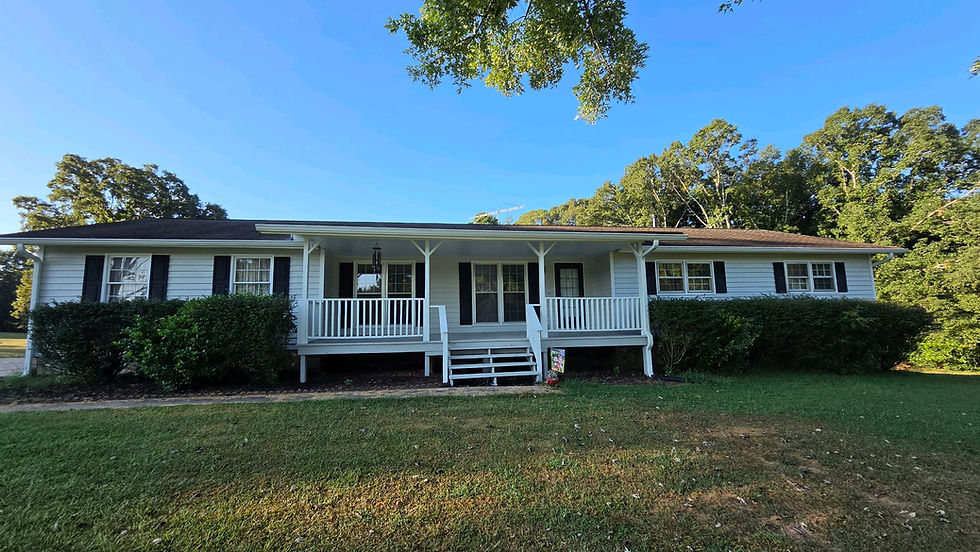
Property: Private luxury residence
Purchase: More than $3 million
Representation: Buyer
Primary objective: Privacy, space, location, and long-term value
Primary challenge: Jumbo financing delays as critical contractual deadlines approached and expired
Financial exposure: A substantial six-figure earnest money commitment that increased as additional extensions were negotiated
Strategy: Contract monitoring, risk assessment, repeated extension negotiations, written amendments, lender coordination, alternative financing, and continued protection of the buyer’s position
Result: Successful closing with the acquisition preserved and the buyer’s earnest money protected from forfeiture
The Client’s Objective
The buyer came to me through a referral while searching for a luxury home in Metro Atlanta. Privacy was one of his highest priorities. He wanted a residence with significant space, a desirable location, and a setting that provided greater separation and discretion.
We identified a Roswell property that aligned exceptionally well with those priorities. The home offered the scale, location, privacy, and long-term potential the buyer wanted. It also presented an unusual value opportunity.
The residence required significant improvement, so the acquisition could not be evaluated simply by looking at the asking price or price per square foot. The property’s condition, previous market history, land, scale, location, and future potential all had to be considered together. After evaluating those factors, we determined that the opportunity made sense for the buyer. We successfully negotiated the property under contract for more than $3 million.
Establishing the Financing Strategy
My client entered the transaction with an established lending relationship and was financially well qualified for the purchase. Before submitting the offer, I communicated directly with the lender regarding the buyer’s qualifications and the proposed contractual terms. The lender confirmed that the buyer was qualified and that the financing structure was workable. Based on those representations, we moved forward with the contract.
The transaction included a significant earnest money commitment from the beginning. At that point, my responsibility was not simply to monitor the property. I also needed to monitor the contractual dates and protections affecting the buyer.
Monitoring the Financing Contingency
Throughout the transaction, I closely monitored the financing contingency and other contractual deadlines. As the financing contingency approached expiration, I continued communicating with the lender regarding the status of the jumbo loan. I was repeatedly advised that the financing was progressing.
After the financing contingency had expired, however, I was informed that the lender required additional time. That materially changed the buyer’s position. The transaction was no longer simply about waiting for financing approval. The buyer now had substantially greater contractual and financial exposure if the loan could not be completed. Recognizing that change immediately became critical.
Additional Time Was Not Automatic
When the lender requested more time, the closing date could not simply be moved without the seller’s agreement. Additional time had to be negotiated. The seller had already agreed to a multimillion-dollar transaction and was expecting performance within the contractual timeline.
I returned to the listing side and negotiated an extension on behalf of the buyer. The seller agreed. That negotiation preserved the buyer’s opportunity to purchase the residence. The material changes to the transaction were documented through written amendments so that the buyer, seller, lender, and closing professionals were operating from the same revised contractual timeline.
When the Financing Still Was Not Ready
As the extended closing approached, the original lender again indicated that additional time would be necessary. At this point, the contractual risk had increased significantly. The seller was willing to consider another extension, but only in exchange for a greater financial commitment from the buyer. As additional extensions were negotiated, the seller required the buyer to increase his earnest money commitment. The buyer’s financial exposure therefore increased as the transaction continued.
When Earnest Money Became a Major Risk
Portions of the buyer’s increased earnest money commitment ultimately became nonrefundable. That changed the analysis. Every additional extension now had to be evaluated not simply in terms of whether financing might eventually be completed, but also against the amount of capital the buyer could potentially lose if the transaction did not close.
Before the buyer accepted additional contractual exposure, I explained the risk created by the expired financing protection, the seller’s extension requirements, and the potential consequences if financing could not be completed within the revised timeline. My role was to make sure the buyer understood both the opportunity and the risk before making each decision.
Advising the Client When Loyalty and Risk Collided
The buyer had a longstanding personal relationship with his original lender. That relationship mattered to him, and he wanted to give the lender every opportunity to complete the financing. My responsibility was not to dismiss that relationship. My responsibility was to make sure the buyer clearly understood how the transaction was changing.
As the deadlines continued to move and the buyer’s earnest money exposure increased, the question became whether continuing with the same financing strategy created an unacceptable level of contractual risk. I advised the buyer that we needed to seriously consider another solution.
Navigating a High-Pressure Negotiation Environment
The transaction became increasingly high-pressure as the seller’s willingness to accommodate additional delays diminished. Despite tense negotiations and limited flexibility from the listing side, I maintained a professional, solution-focused approach and continued advocating for the buyer while preserving the working relationship necessary to keep the transaction together. At this stage, maintaining that relationship mattered.
The objective was not simply to win a difficult conversation. It was to keep the seller engaged long enough to create a viable path to closing. That required balancing firm advocacy for my client with the professionalism necessary to continue negotiating as the seller’s patience became increasingly limited.
Evaluating the Consequences of Another Delay
At each stage, I had to evaluate the consequences of another delay. That included the buyer’s increasing earnest money exposure, the expiration of financing protections, the seller’s willingness to grant additional time, and the contractual consequences if the buyer ultimately could not close. Continuing to ask for more time without changing the underlying financing strategy was no longer sufficient. We needed a solution that could actually get the transaction to closing.
Identifying a New Financing Solution
I identified a Georgia mortgage professional I trusted who had experience with complex financing and who believed the transaction could be completed within the seller’s required timeframe. Changing lenders late in a multimillion-dollar transaction is not a minor decision. The buyer had already spent months pursuing the property. A substantial amount of earnest money was already exposed. The seller’s patience was limited. The new lender would need to move quickly. After reviewing the circumstances with my client, I recommended transitioning the financing.
Changing Lenders Did Not Restart the Contract
Changing lenders did not restart the transaction. The replacement lender had to step into an existing multimillion-dollar contract with significant earnest money already committed, contractual protections already changed, and a seller who was granting only limited additional time. There was no fresh financing period simply because a new lender became involved. The replacement lender needed to understand the transaction immediately and perform within the compressed timeline I was able to negotiate. That made coordination especially important.
Negotiating the Final Extension
To create enough time for the replacement lender to perform, I returned to the seller again. The seller agreed to provide additional time but required the buyer to accept greater financial exposure in exchange for the extension. Before the buyer agreed, we discussed the risk, the timeline, and why I believed the replacement lender could perform within the required period. The buyer ultimately agreed to move forward. The extension was negotiated. The financing team changed. The contractual timeline was updated. The new lender immediately began working toward the revised closing date.
The Result
The replacement lender moved quickly. Within approximately two weeks, the financing was completed. The transaction successfully closed. My client acquired the private Roswell residence he had spent months pursuing. More importantly, we preserved a transaction in which a substantial six-figure amount of earnest money had become exposed. What began as a luxury home search ultimately required contract monitoring, repeated negotiations, written amendments, lender coordination, risk assessment, client counseling, and the ability to change strategy when the original path was no longer producing the required result.
How I Managed the Contractual Risk
Throughout the transaction, my role included monitoring the financing contingency and other critical dates. I recognized when the buyer’s original financing protections had changed. I negotiated multiple extensions rather than assuming additional time would be granted. I coordinated written amendments reflecting material changes to the transaction. I advised the buyer as his earnest money exposure increased. I discussed the implications of accepting nonrefundable financial exposure. I evaluated the consequences of continuing with a financing strategy that was repeatedly missing contractual deadlines. I identified an alternative lender who could step into an existing jumbo transaction. I negotiated additional time for the replacement financing to be completed. I continued coordinating with the professionals involved until the transaction reached closing. The objective throughout the process was to preserve the buyer’s opportunity to acquire the property while continuously evaluating and managing the financial exposure created by the contract.
What Luxury Buyer Representation Looks Like When a Transaction Gets Complicated
High net worth buyers often have attorneys, financial advisers, lenders, accountants, and other trusted professionals already in their lives. A strong real estate adviser should know how to work within that existing advisory structure while also recognizing when the real estate transaction requires another solution.
Luxury buyer representation may include property access and negotiation, but complicated transactions can require much more. They may require understanding contractual deadlines. They may require identifying when contingency protections have changed. They may require advising a client when earnest money becomes exposed. They may require negotiating multiple amendments. They may require coordinating with lenders, attorneys, inspectors, and other professionals. They may require delivering difficult information clearly. They may require maintaining professionalism in a high-pressure negotiation environment. And they may require changing strategy quickly when the client’s capital becomes increasingly vulnerable.
In this acquisition, the property itself was only one part of the assignment. Protecting the buyer’s position became equally important.
Why the Right Advisory Team Matters in Atlanta Luxury Real Estate
A lender does not need to be located in Georgia to successfully finance a Georgia property. However, complex luxury transactions benefit from professionals who understand the contractual environment in which the transaction is taking place. For a multimillion-dollar Atlanta home purchase, buyers should consider whether their lender has experience with jumbo financing, understands the required timelines, communicates proactively, and can coordinate effectively with Georgia real estate professionals and closing attorneys.
The same principle applies to the real estate agent. Luxury representation should involve more than access to expensive homes. It should include the ability to recognize risk, understand contractual deadlines, communicate difficult information clearly, negotiate when circumstances change, coordinate multiple professionals, maintain composure during high-pressure negotiations, and identify additional resources when the transaction requires them.
Private Client Representation for Atlanta Luxury Buyers
I represent buyers seeking luxury homes and private real estate opportunities throughout Metro Atlanta, including Roswell, Buckhead, Sandy Springs, Milton, Alpharetta, Johns Creek, Brookhaven, Vinings, and surrounding communities. My approach combines direct Associate Broker involvement, discretion, strategic property analysis, negotiation, contract oversight, and hands-on coordination throughout the acquisition.
For a high net worth buyer, the goal is not simply to secure a property. It is to protect the client’s position while moving the transaction intelligently from opportunity to ownership.
About Kereen Henry
Kereen Henry is an Atlanta luxury real estate Associate Broker with Keller Williams Luxury, representing buyers and sellers throughout Metro Atlanta. Her approach combines private client service, strategic negotiation, market analysis, contract oversight, and direct involvement throughout the transaction.
With more than a decade of real estate experience and an extensive background as a real estate investor, Kereen works with clients navigating luxury purchases, sales, relocations, investment decisions, and complex transactions throughout Atlanta and surrounding communities.
Considering a Luxury Home Purchase in Metro Atlanta?
Whether you are beginning a private home search, evaluating a multimillion-dollar acquisition, relocating to Atlanta, or navigating a complicated transaction, experienced representation can help you evaluate the opportunity while protecting your position throughout the process.
Kereen Henry Associate Broker
Keller Williams Luxury
Atlanta, Georgia

Comments